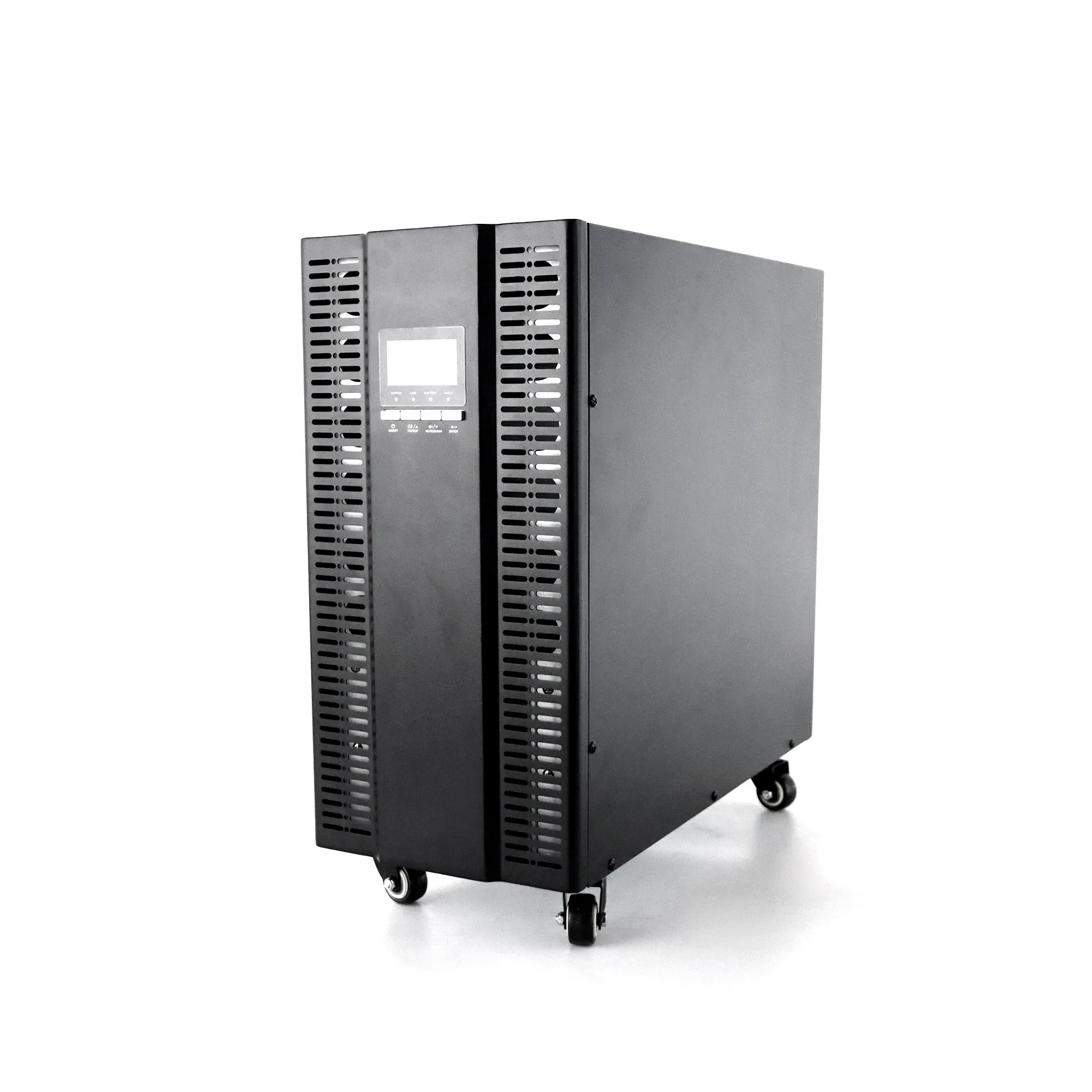
온라인 UPS의 작동 원리

13,Mar,2026

page views:

59d5c59e9ca3358baece3e0c884700a5_webp.webp

  • 온라인 UPS가 정상적으로 전력망에 의해 구동되는 경우 그리드의 전압 입력은 노이즈 필터에 의해 필터링되어 그리드의 고주파 간섭을 제거하고 순수한 AC 전원을 얻을 수 있습니다. 정류 및 필터링을 위해 정류기에 들어가고 AC 전원을 부드러운 DC 전원으로 변환하여 두 경로로 나눕니다. 한 경로는 배터리를 충전하기 위해 충전기로 들어가고 다른 경로는 인버터를 공급합니다. 그러나 인버터는 부하가 사용할 수 있도록 DC 전원을 220V, 50Hz AC 전원으로
     When the mains power is interrupted, the input of AC power has been cut off and the rectifier is no longer working. At this time, the battery discharges and delivers energy to the inverter, which then converts DC power into AC power for use by the load. So, for the load, although the mains power no longer exists, the load has not stopped due to the interruption of mains power and can still operate normally.The working principle of backup UPS is that when the power supply of the grid is normal, one line of mains power charges the battery through a rectifier, while the other line of mains power is initially stabilized by an automatic voltage regulator, absorbs some of the grid interference, and then directly supplies power to the load through a bypass switch. At this point, the battery is in a charging state until it is fully charged and enters a float charging state. UPS is equivalent to a regulator with poor voltage regulation performance, which only improves the amplitude fluctuation of the mains voltage and does not make any adjustments to the "electrical pollution" such as frequency instability and waveform distortion that occur on the power grid. When the voltage or frequency of the power grid exceeds the input range of the UPS, that is, under abnormal circumstances, the input of AC power has been cut off, the charger stops working, the battery discharges, and the inverter starts working under the control of the control circuit, causing the inverter to generate 220V, 50Hz AC power. At this time, the UPS power supply system switches to the inverter to continue supplying power to the load. The inverter of the backup UPS is always in a backup power supply state.

온라인 인터리빙 UPS의 작동 원리는 주 전원이 정상일 때 주 전원에서 부하에 직접 전원을 공급하는 것입니다. 주 전원이 낮거나 높을 때 UPS 내부 안정화 회로 및 출력에 의해 안정화됩니다. 주 전원이 비정상적이거나 전원이 차단되면 변환 스위치를 통해 배터리 인버터 전원 공급 장치로 변환됩니다.
 그 특징은 넓은 입력 전압 범위, 낮은 소음, 작은 크기 등이지만 전환 시간도 있습니다. 그러나 이 모델은 일반 백업 UPS에 비해 보호 기능이 강하며 인버터 출력 전압 파형이 더 우수합니다. 일반적으로 사인파입니다.

온라인 UPS의 작동 원리

온라인 UPS가 정상적으로 전력망에 의해 구동되는 경우 그리드의 전압 입력은 노이즈 필터에 의해 필터링되어 그리드의 고주파 간섭을 제거하고 순수한 AC 전원을 얻을 수 있습니다. 정류 및 필터링을 위해 정류기에 들어가 AC 전원을 부드러운 DC 전원으로 변환한 다음 두 경로로 나뉩니다. 한 경로는 배터리를 충전하기 위해 충전기로 들어가고 다른 경로는 인버터를 공급합니다. 그러나 인버터는 부하가 사용할 수 있도록 DC 전원을 220V, 50Hz AC 전원으로 변환합니다. 주 전원이 중단되면 AC 전원의 입력이 차단되고 정류기가 더 이상 작동하지 않습니다. 이때 배터리가 방출되어 인버터로 에너지를 전달한 다음 부하에 따라서 부하의 경우 주 전원이 더 이상 존재하지 않지만 주 전원 중단으로 인해 부하가 중지되지 않고 여전히 정상적으로 작동할 수 있습니다.

백업 UPS의 작동 원리는 그리드의 전원 공급 장치가 정상일 때 주 전원 한 라인이 정류기를 통해 배터리를 충전하는 반면 다른 주 전원 라인은 처음에는 자동 전압 레귤레이터에 의해 안정화되어 그리드 간섭의 일부를 흡수하고 바이패스 스위치를 통해 부하에 직접 전원을 공급하는 것입니다. 이 시점에서 배터리는 완전히 충전되어 부동 충전 상태에 들어갈 때까지 충전 상태에 있습니다. UPS는 전압 조절 성능이 좋지 않은 레귤레이터와 동등하여 주 전압의 진폭 변동만 개선하고 전력망에서 발생하는 주파수 불안정성 및 파형 왜곡과 같은 "전기 오염"을 조정하지 않습니다. 전력망의 전압 또는 주파수가 UPS의 입력 범위를 초과하면, 즉 비정상적인 상황에서 AC 전원의 입력이 차단되고 충전기가 작동을 멈추고 배터리가 방전되며 인버터가 제어 회로의 제어 하에 작동하기 시작하여 인버터가 220V, 50Hz AC 전원을 생성합니다. 이때 UPS 전원 공급 시스템이 인버터로 전환되어 부하에 계속 전원을 공급합니다. 백업 UPS의 인버터는 항상 백업 전원 공급 상태에 있습니다.

온라인 인터리빙 UPS의 작동 원리는 주 전원이 정상일 때 주 전원에서 부하에 직접 전원을 공급하는 것입니다. 주 전원이 낮거나 높을 때 UPS 내부 안정화 회로 및 출력에 의해 안정화됩니다. 주 전원이 비정상적이거나 전원이 차단되면 변환 스위치를 통해 배터리 인버터 전원 공급 장치로 변환됩니다. 넓은 입력 전압 범위, 낮은 소음, 작은 크기 등이 특징이지만 전환 시간도 있습니다. 그러나 일반 백업 UPS에 비해 이 모델은 보호 기능이 강하며 인버터 출력 전압 파형이 더 좋습니다. 일반적으로 사인파입니다.

We use cookie to improve your online experience. By continuing to browse this website, you agree to our use of cookie.

Cookies

Please read our Terms and Conditions and this Policy before accessing or using our Services. If you cannot agree with this Policy or the Terms and Conditions, please do not access or use our Services. If you are located in a jurisdiction outside the European Economic Area, by using our Services, you accept the Terms and Conditions and accept our privacy practices described in this Policy.
We may modify this Policy at any time, without prior notice, and changes may apply to any Personal Information we already hold about you, as well as any new Personal Information collected after the Policy is modified. If we make changes, we will notify you by revising the date at the top of this Policy. We will provide you with advanced notice if we make any material changes to how we collect, use or disclose your Personal Information that impact your rights under this Policy. If you are located in a jurisdiction other than the European Economic Area, the United Kingdom or Switzerland (collectively “European Countries”), your continued access or use of our Services after receiving the notice of changes, constitutes your acknowledgement that you accept the updated Policy. In addition, we may provide you with real time disclosures or additional information about the Personal Information handling practices of specific parts of our Services. Such notices may supplement this Policy or provide you with additional choices about how we process your Personal Information.


Cookies

Cookies are small text files stored on your device when you access most Websites on the internet or open certain emails. Among other things, Cookies allow a Website to recognize your device and remember if you've been to the Website before. Examples of information collected by Cookies include your browser type and the address of the Website from which you arrived at our Website as well as IP address and clickstream behavior (that is the pages you view and the links you click).We use the term cookie to refer to Cookies and technologies that perform a similar function to Cookies (e.g., tags, pixels, web beacons, etc.). Cookies can be read by the originating Website on each subsequent visit and by any other Website that recognizes the cookie. The Website uses Cookies in order to make the Website easier to use, to support a better user experience, including the provision of information and functionality to you, as well as to provide us with information about how the Website is used so that we can make sure it is as up to date, relevant, and error free as we can. Cookies on the Website We use Cookies to personalize your experience when you visit the Site, uniquely identify your computer for security purposes, and enable us and our third-party service providers to serve ads on our behalf across the internet.

We classify Cookies in the following categories:
 ●  Strictly Necessary Cookies
 ●  Performance Cookies
 ●  Functional Cookies
 ●  Targeting Cookies


Cookie List
A cookie is a small piece of data (text file) that a website – when visited by a user – asks your browser to store on your device in order to remember information about you, such as your language preference or login information. Those cookies are set by us and called first-party cookies. We also use third-party cookies – which are cookies from a domain different than the domain of the website you are visiting – for our advertising and marketing efforts. More specifically, we use cookies and other tracking technologies for the following purposes:

Strictly Necessary Cookies
These cookies are necessary for the website to function and cannot be switched off in our systems. They are usually only set in response to actions made by you which amount to a request for services, such as setting your privacy preferences, logging in or filling in forms. You can set your browser to block or alert you about these cookies, but some parts of the site will not then work. These cookies do not store any personally identifiable information.

Functional Cookies
These cookies enable the website to provide enhanced functionality and personalisation. They may be set by us or by third party providers whose services we have added to our pages. If you do not allow these cookies then some or all of these services may not function properly.

Performance Cookies
These cookies allow us to count visits and traffic sources so we can measure and improve the performance of our site. They help us to know which pages are the most and least popular and see how visitors move around the site. All information these cookies collect is aggregated and therefore anonymous. If you do not allow these cookies we will not know when you have visited our site, and will not be able to monitor its performance.

Targeting Cookies
These cookies may be set through our site by our advertising partners. They may be used by those companies to build a profile of your interests and show you relevant adverts on other sites. They do not store directly personal information, but are based on uniquely identifying your browser and internet device. If you do not allow these cookies, you will experience less targeted advertising.

How To Turn Off Cookies
You can choose to restrict or block Cookies through your browser settings at any time. Please note that certain Cookies may be set as soon as you visit the Website, but you can remove them using your browser settings. However, please be aware that restricting or blocking Cookies set on the Website may impact the functionality or performance of the Website or prevent you from using certain services provided through the Website. It will also affect our ability to update the Website to cater for user preferences and improve performance. Cookies within Mobile Applications

We only use Strictly Necessary Cookies on our mobile applications. These Cookies are critical to the functionality of our applications, so if you block or delete these Cookies you may not be able to use the application. These Cookies are not shared with any other application on your mobile device. We never use the Cookies from the mobile application to store personal information about you.

If you have questions or concerns regarding any information in this Privacy Policy, please contact us by email at . You can also contact us via our customer service at our Site.